19 June 2026
Anthony Nocera - “The Shape of What’s Left.”
Anthony is a playwright living on Kaurna land in Adelaide. He is prolific at present, developing multiple creative works concurrently, balancing a growing artistic practice alongside a full successful career in arts marketing.
What brought me to interview Anthony for our ongoing Midsumma Capturing Courage PRIDE portrait series, is that he has recently been recognised nationally through the Midsumma and Gasworks Queer Playwriting Award Showcase. Anthony’s latest play (still in development), My Hair Is Thinning, won the 2025/2026 Queer Playwriting Award Showcase for best new script.
The title itself carries a kind of disarming honesty. Tender, self-aware, and humorous. But beneath that lightness sits something far more complex.
But none of that is where this story begins.
It begins with a question, from much earlier in his career in arts administration. Why weren’t the stories he recognised, his community, his world, being told on stage?
“I noticed that for a theatre community that had so many queer people in it… I didn’t really see a lot of work being made for them. Or for me.” Anthony explained.
So, he did what many artists eventually have to do. He started writing the thing he couldn’t find.
His writing, he shares with me, is not separate from his life. It is how he moves through it.
Particularly now.
“The way I cope is writing. I’ve always done that… that’s how I process things. I’ll write through it.”
There is a noticeable settling in the space between us, when Anthony speaks about his partner Jamie. Something perhaps better explained as a presence that is still shifting in shape.
Anthony met Jamie Anderson when he was twenty-one. What began almost accidentally, a date with a man twenty-four years older than him, initially framed as research material for future writing, became seven years of life together.
“I’ve grown up alongside this man. I finished uni and started working and travelled overseas. I did all these things that are hallmarks of adulthood. All that happened alongside him.” “I genuinely believe that when we first laid eyes on each other… we immediately fell in love. We built a house together.”
It was during this time that Anthony began writing Log Boy, a play inspired by conversations overheard between Jamie and one of his closest friends.
“Every Tuesday night Jamie would catch up with his friend Justin… they’d known each other for decades. One night, they were talking about someone that they’d lost to AIDS and how much they missed them, and about the fear they felt. I hadn’t ever heard conversations like the ones they had, let alone seen them on a page or on a stage. And I thought there is something in that… there is something in the rub of the generational differences between us. So, I started writing.”
Stories of queer history. Of survival. Of lives shaped by a different time.
But midway through Log Boy’s development, life shifted.
Jamie passed away unexpectedly from complications following chemotherapy treatment, for what had been characterised as a non-fatal form of cancer.
And suddenly, the thing Anthony had been writing about became something he was himself living.
“I realised I’d been writing a play about loss… and then the loss I was writing about was something I was now facing.”
The work changed.
“I was thinking about Jamie and the experience of losing him… Jamie’s alive in that play. I wanted to keep his actual words. I wanted people to get to know him”
But the personal questions deepened. “How do I age now without this person?”
“I started thinking about the parallels and the differences between us… despite the age difference, and despite the fact that Jamie had chemo, he still had this perfect head of hair. My hair was thinning.”
Out of this came a new story.
“I wanted to create a different play that represented trying to outrun a feeling of grief or trying to reverse the irreversible.”
Grief, in Anthony’s world, doesn’t sit still. It moves. It shifts. It interrupts. It softens and sharpens in cycles.
He describes it as a kind of haunting. Not something to be resolved, but something to live alongside.
“I think for me, it’s made me realise that grief is just this thing I am going to have to live with… and that’s not a bad thing.” There are days that hold more weight than others. “My birthday and Jamie’s birthday… the day that he passed away… they’re going to be really hard days, and they’re not ever, not going to be.”
Yet within all of this, there is playfulness and intimacy. “Jamie’s just there.” He indicates to the nearby urn on the sideboard nearby.” Do you want to say hello? I probably need to clean his urn actually. I’ll give him a wipe down”
Anthony is still writing through it all. Deeply personal, threaded with absurdity and camp, Anthony’s writing lives in the spaces and tension between it all.
The Midsumma and Gasworks supported Queer Playwriting Award Showcase provides developmental support for selected finalist writers in preparing a segment of a developing new script for public presentation, and as the winner, Anthony will now receive additional support to move the work, alongside actors and a director, to full presentation in early 2027.
“When you are writing a play, you actually need people… you need actors and directors to build it for you so you can see where it’s not working.”
There is vulnerability in that process. “When you hand over your first draft… you actually hand something over that is wrong, and then you have to excruciatingly sit through it.” But there is something sustaining in the process as well, Anthony explained to me. “The pain is good… because it helps you get better… and it makes the writing less lonely.”
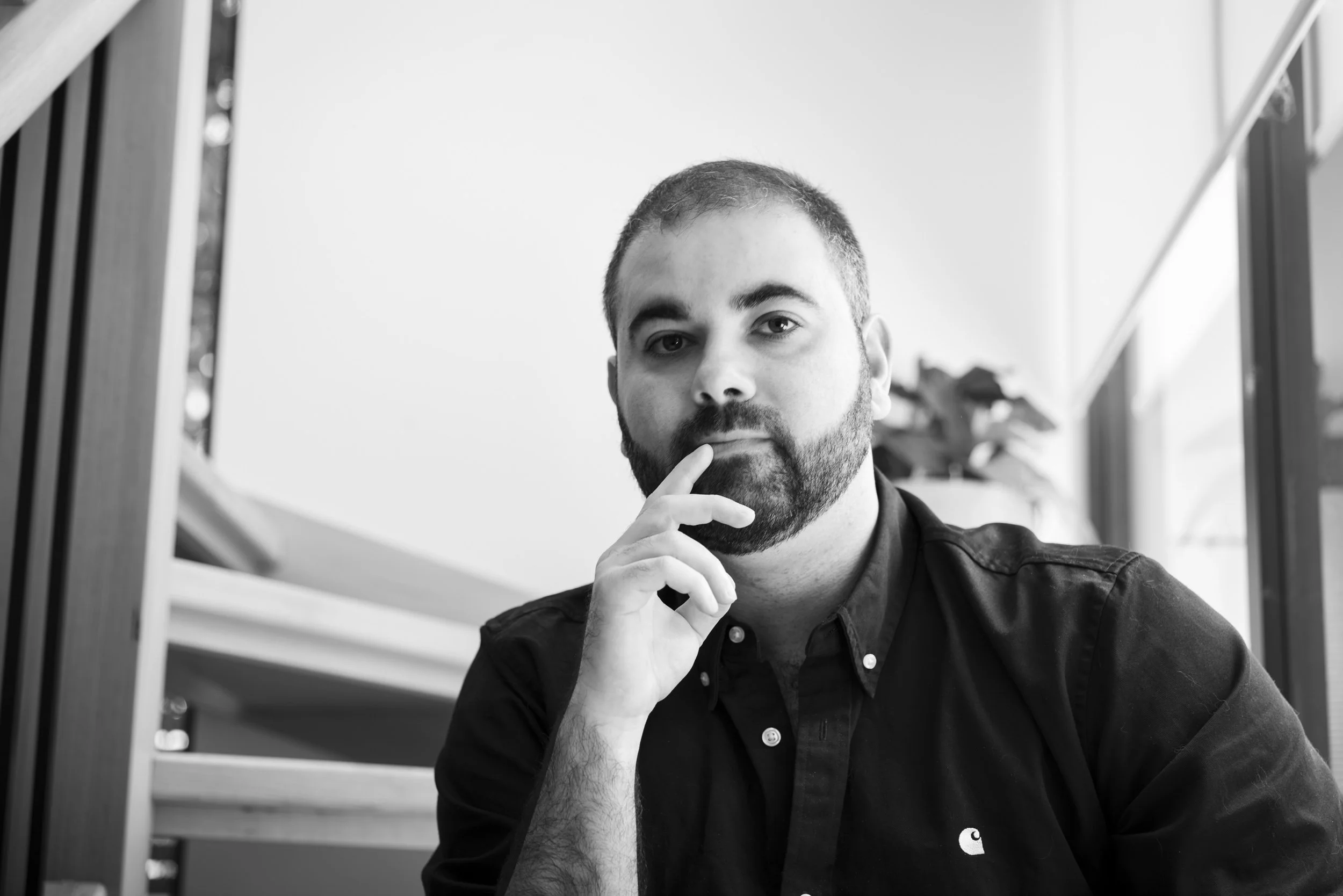
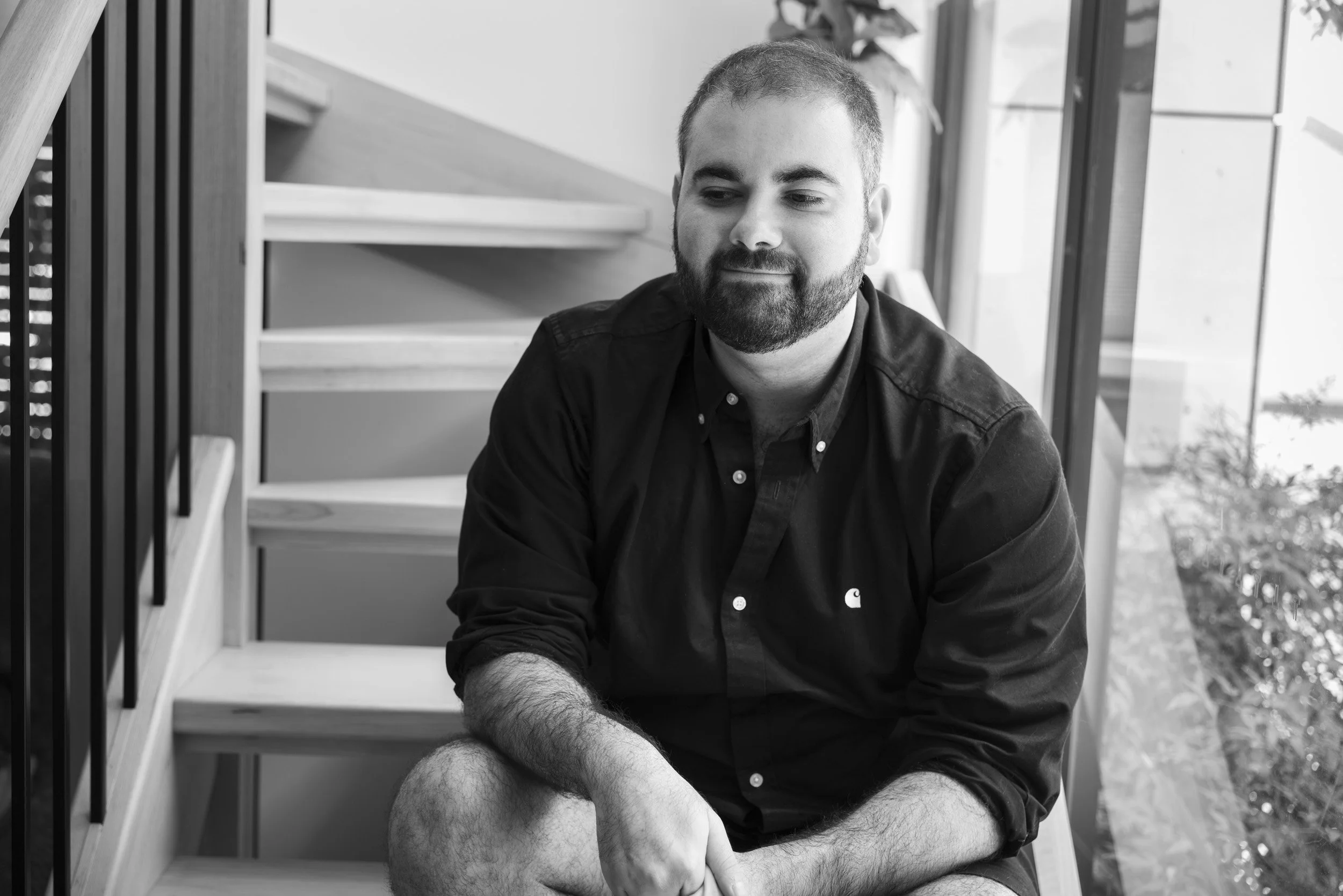
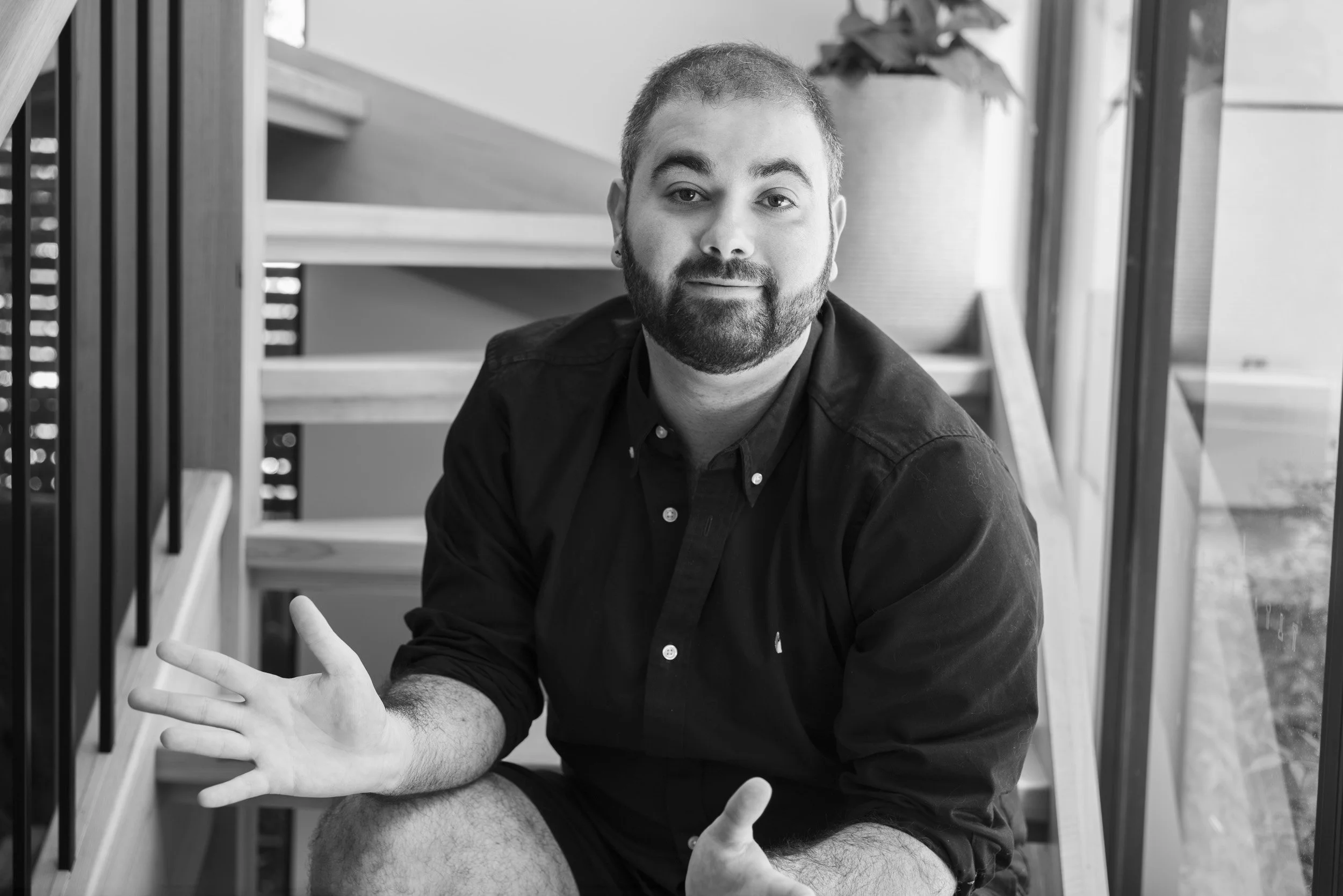
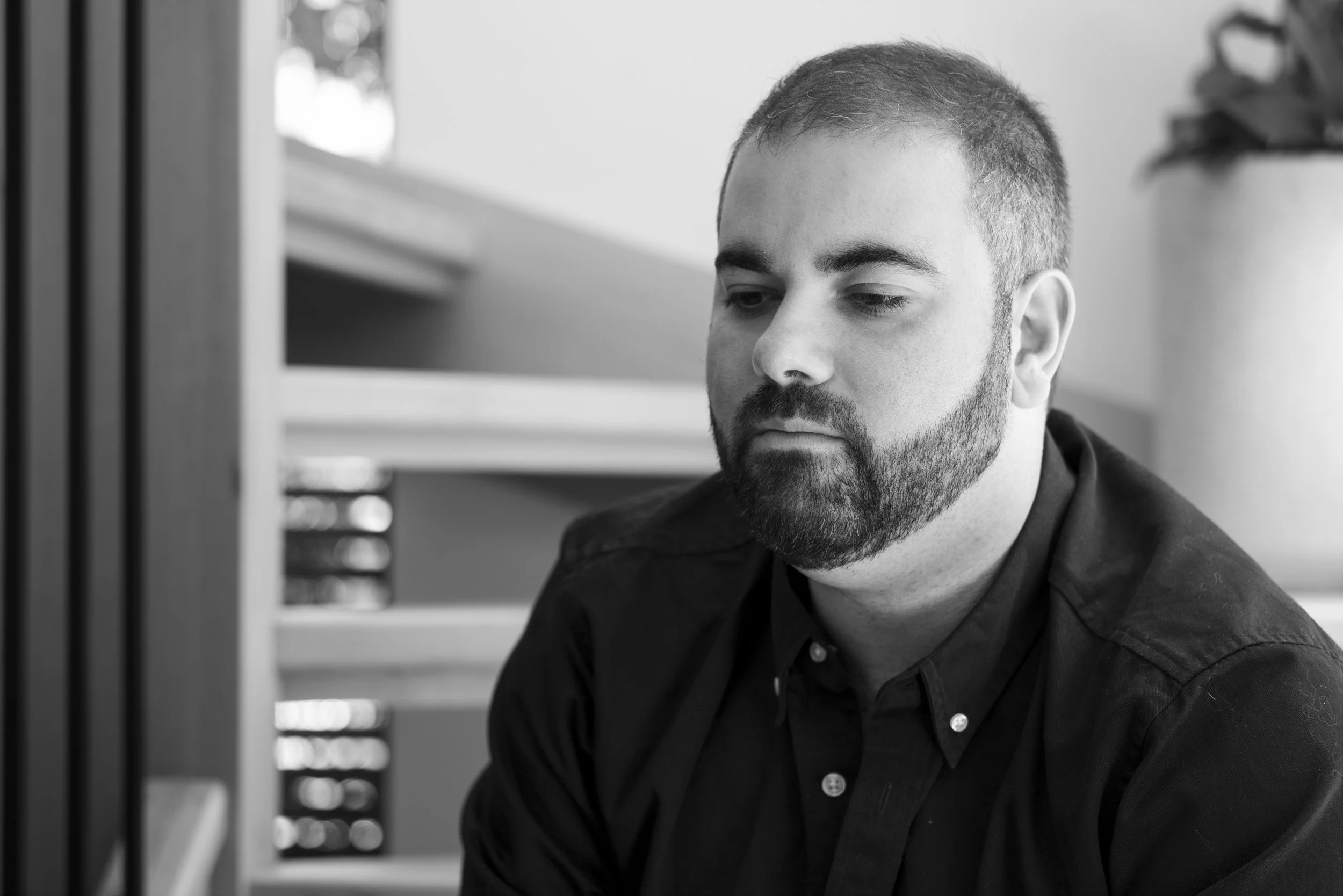
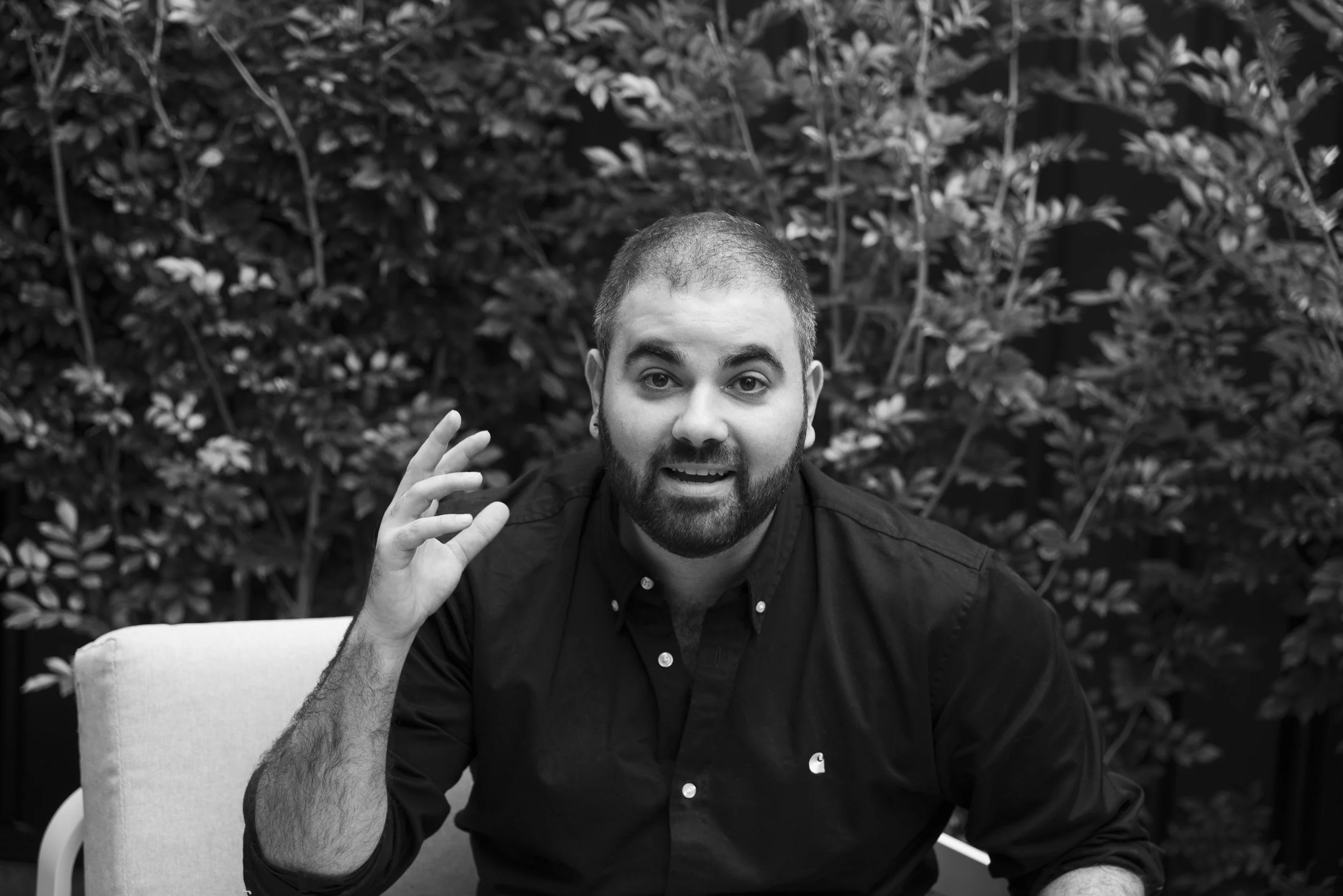
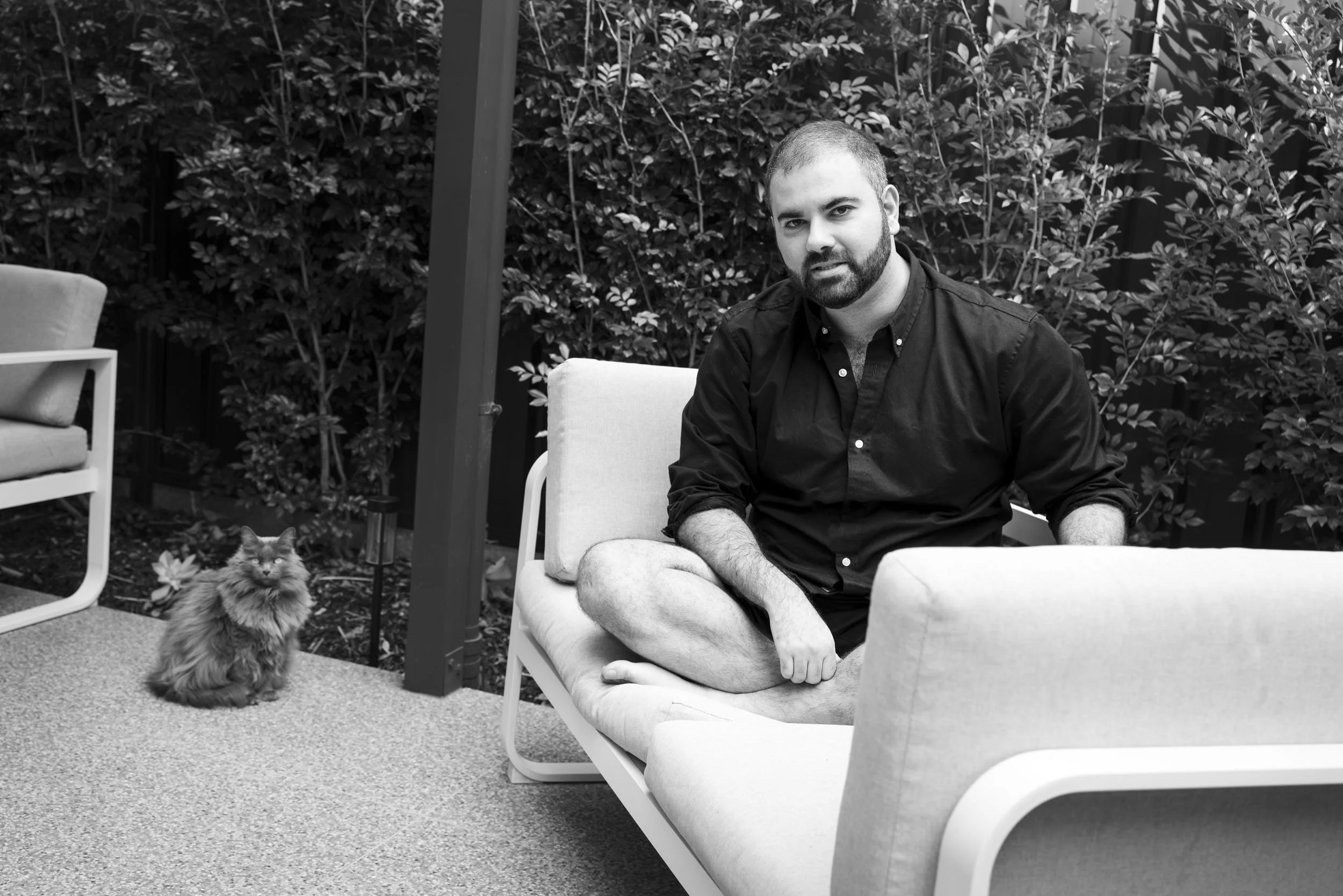
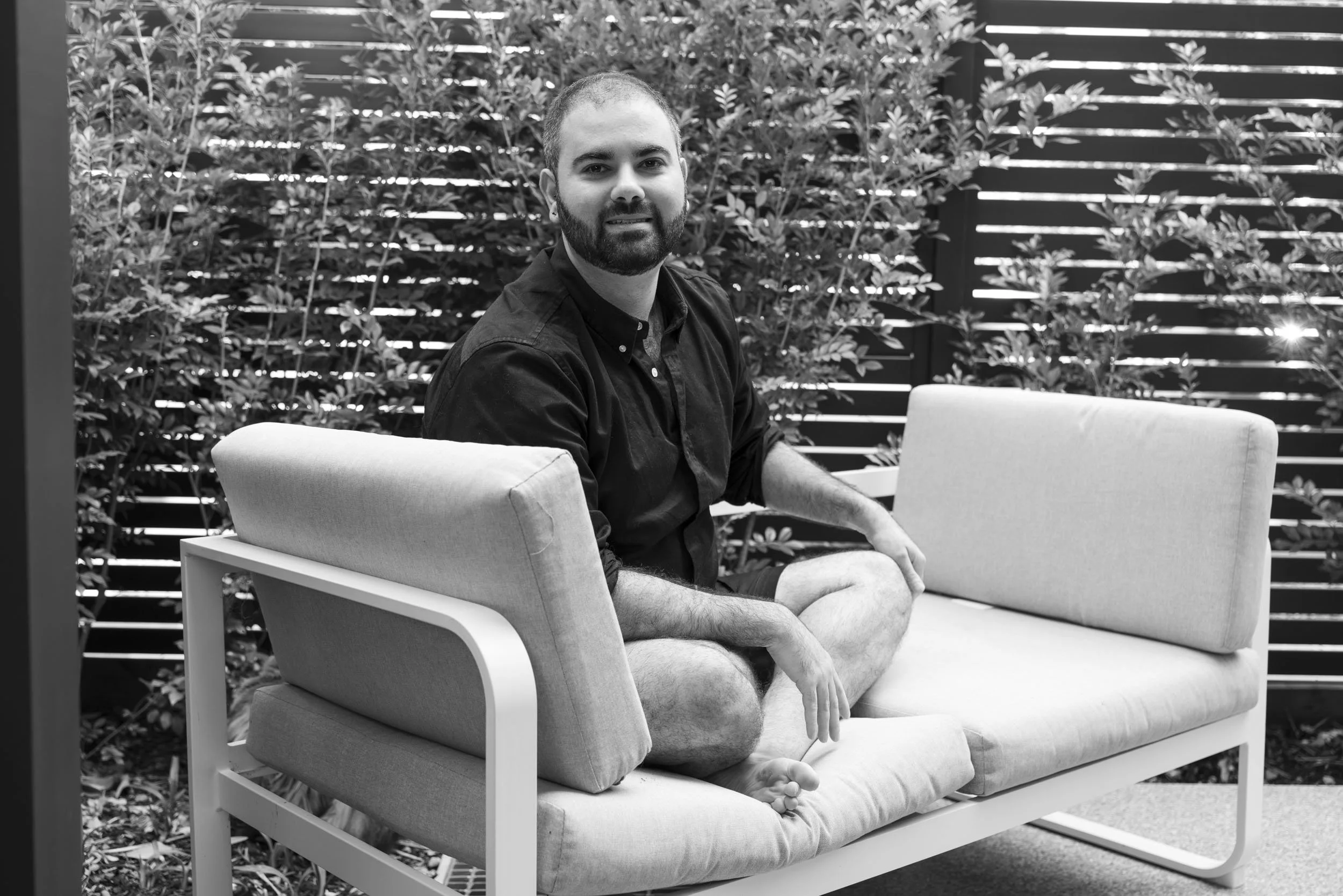
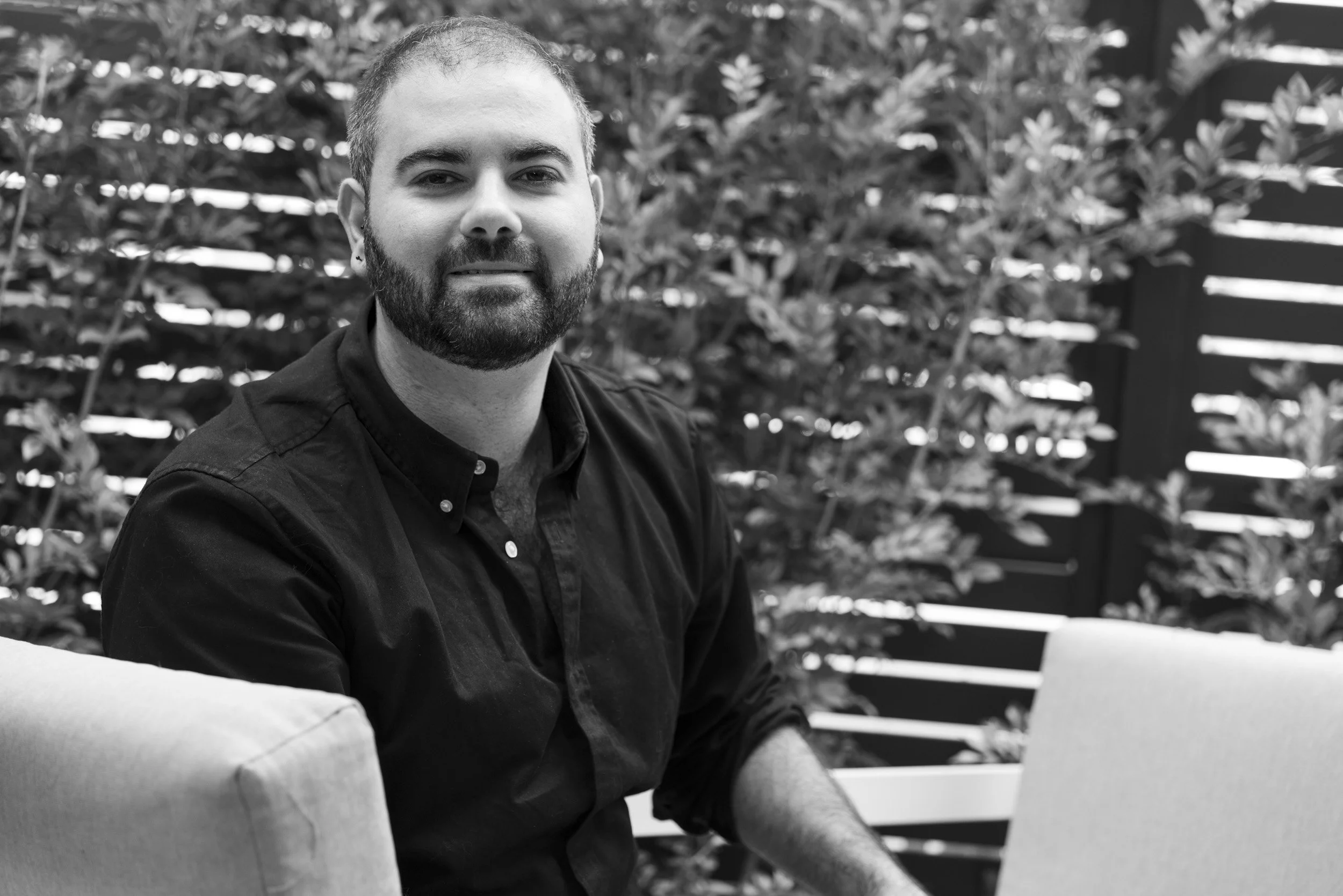
We chatted and I photographed Anthony in the house he built with Jamie.
“This feels like a sanctuary,” he says. “This is the place where I write… but also where I feel closest to Jamie.”
The light moved quietly through the space as we talked. Soft, natural, unforced. It holds something powerful. I could feel it in the pauses between words and in the way, Anthony looks out toward the side of the frame when I held the camera. There was no constructed posed version of self... Only someone in process.
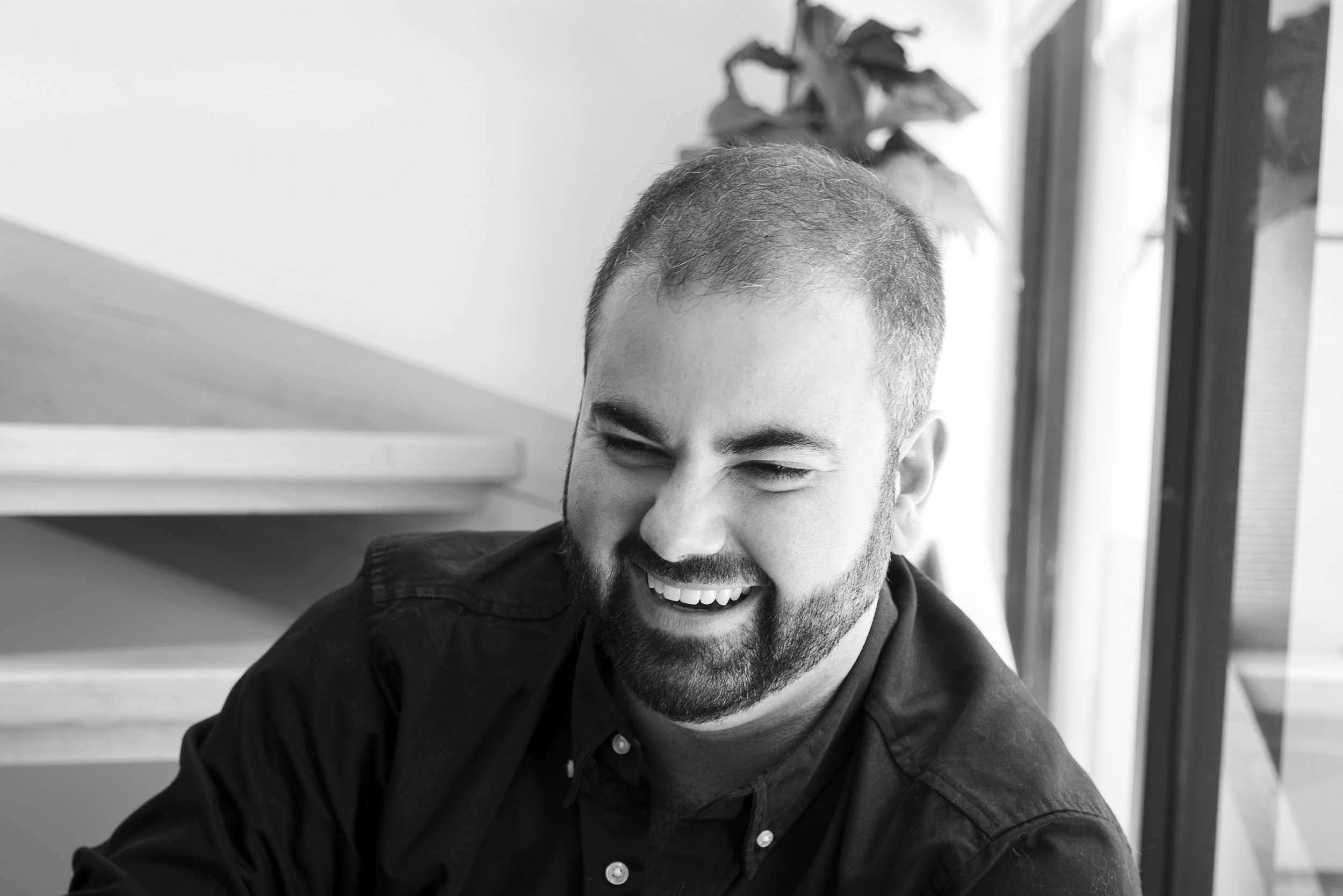
In the photographic images we created, in one frame, Anthony sits cross-legged, grounded, yet exposed. In another, he leans into the space between himself and the camera, inviting connection.
There were moments of laughter too, breaking through unexpectedly, reminding us that grief and joy are not opposites, but companions.
These are images of someone learning to live with uncertainty and accepting it.
“I think writing lets me sit with things I don’t fully understand yet,” he reflects. “It gives them somewhere to go. Discomfort is good,” he tells me. “I’m at my best when I’m the most uncomfortable… I’ve learnt not to be afraid of that, not to run from it, but to actually sit with it. And that’s when the interesting things happen. “
There is a particular kind of courage in that. Not loud. Not performative. But steady.
Anthony doesn’t claim to have grief figured out. “I think I am still working through it…….. and Jamie’s still here.” Not gone. Just changed. And Anthony is still writing through it all. Through the strange, shifting terrain of becoming someone new while carrying someone who is no longer physically here.
In doing so he’s creating work that doesn’t just tell stories. It makes space for them. For himself and for anyone who has ever tried to understand what remains after loss. Through this process, he is someone who has learned, over time, how to stay with feeling long enough to understand it.
As our chat drew to a close, I had the sense that I had not only interviewed an industry colleague, but the genuine feeling of having made a new friend.
Midsumma Capturing Courage is a series about queer people who show up in their lives with honesty, generosity, complexity and vulnerability. Anthony doesn’t just do that. He builds entire worlds from it.