26 December 2025
Ben MacEllen - ‘A Journey to Becoming.’
Over the past few months I’ve been working on something a little different for my Capturing Courage Photographic and blog Series. A longer, more layered portrait that unfolds across time rather than a single post. And to honour the writer - more about words than image. The series is about playwright Ben MacEllen and this is Part Two. (see previous blog for Part One and the full suite of photos)
Sometimes a story doesn’t begin with an event, but with a feeling.
There’s a particular stillness that arrives in a conversation when someone chooses to open a part of their past. When I sat down with Ben MacEllen, as part of our Midsumma Capturing Courage PRIDE series, that stillness settled in as Ben reflected on his years before transitioning.
His voice took on a quiet clarity, full of reflection, and a deep tenderness for the younger self who was trying to make sense of a world that didn’t yet have the words he needed.
Before Ben became the man I interviewed on a recent November afternoon in Bendigo, he spent decades searching for a way of being, that felt true. Growing up across regional towns and Melbourne, he moved through childhood with a quiet ache. A sense of misalignment he couldn’t yet name. He told me that even as a young child, “I didn’t feel seen at all,”. That longing shaped so much of what followed.
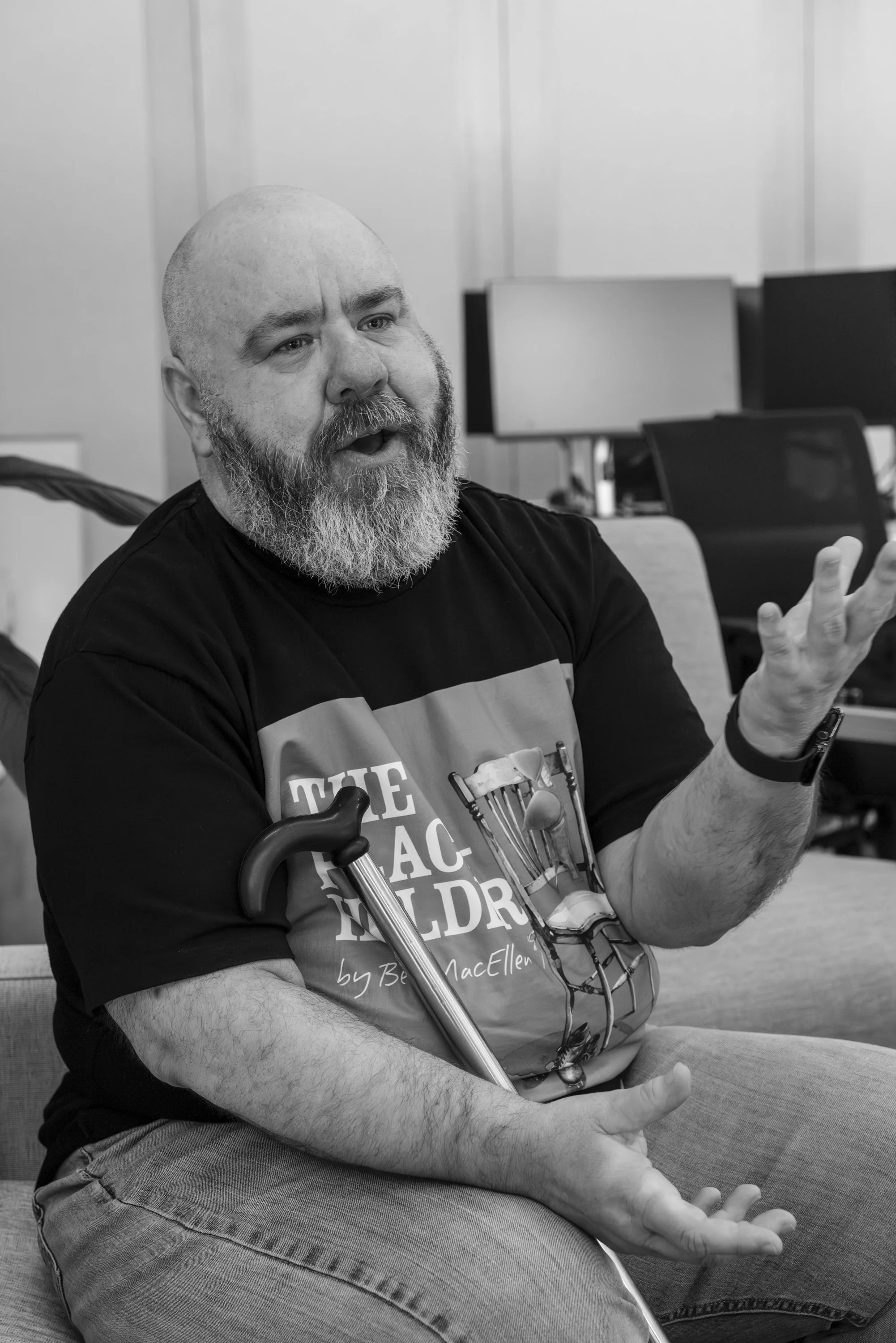
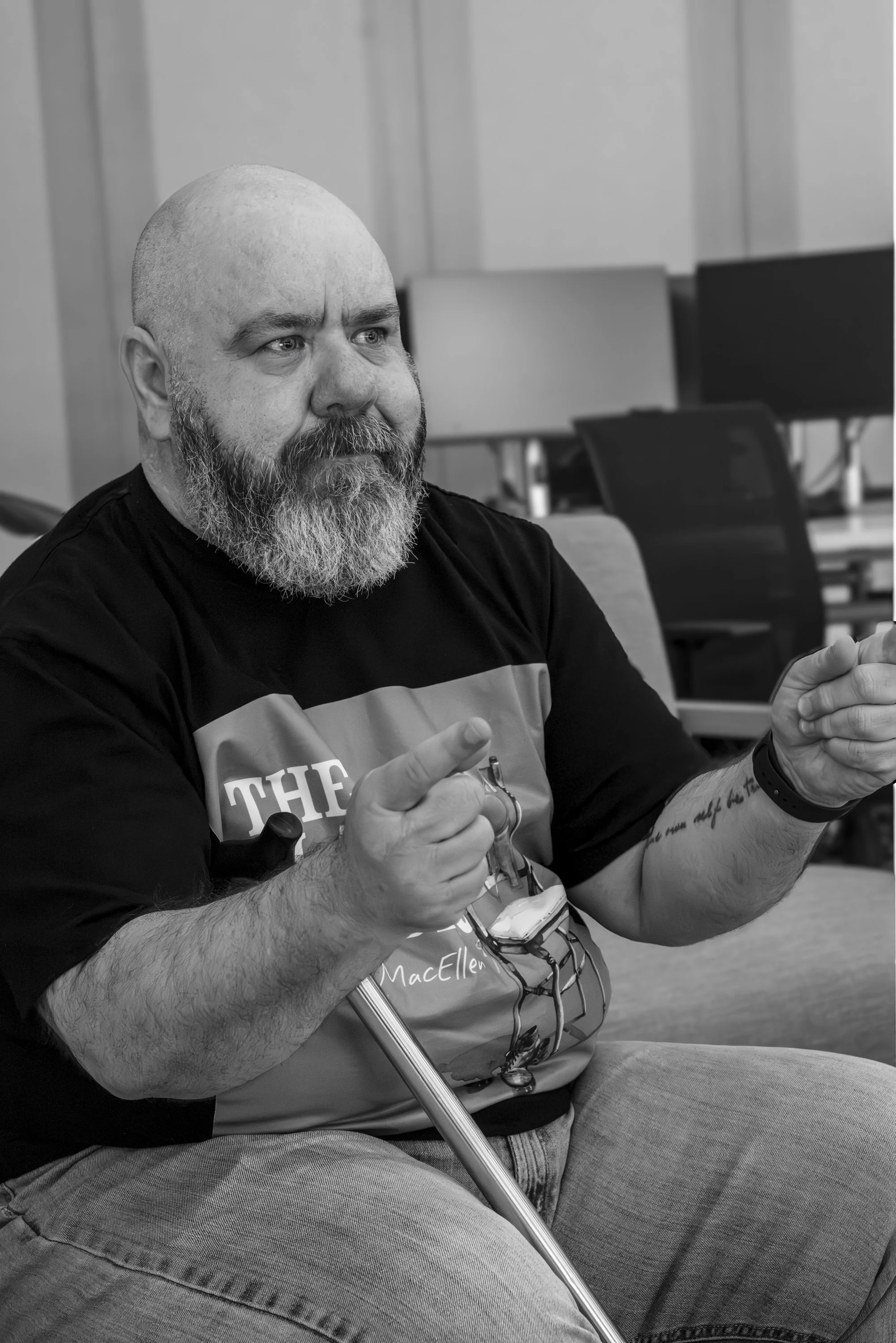
He remembers having what he called “crushes,” but he explained they were never romantic in the way others might assume. “It was more about being seen,” he said. He wanted to be the one who brought flowers, who showed care. Fairytale moments where he wanted to play ‘the prince’ as he put it. He gravitated toward women, especially older women, who noticed him, who acknowledged something true in him even if they didn’t know what that was. Because in those moments, he felt recognised in a way the world rarely offered.
Creativity became his first language of self. He wrote constantly, small plays, short stories, lyrics. “Writing gave me a voice long before I had language for who I was,” he told me.
It became the place he could speak honestly, even before he understood what that honesty meant.
High school was a turbulent time, especially attending an all-girls’ school where he felt adrift. And yet, in that instability, a teacher saw him. Encouraged him. Affirmed him. Creativity became a lifeline. “Sometimes writing was the one way I felt good about myself,” he said.
Translated, it was the first glimmer of being known.
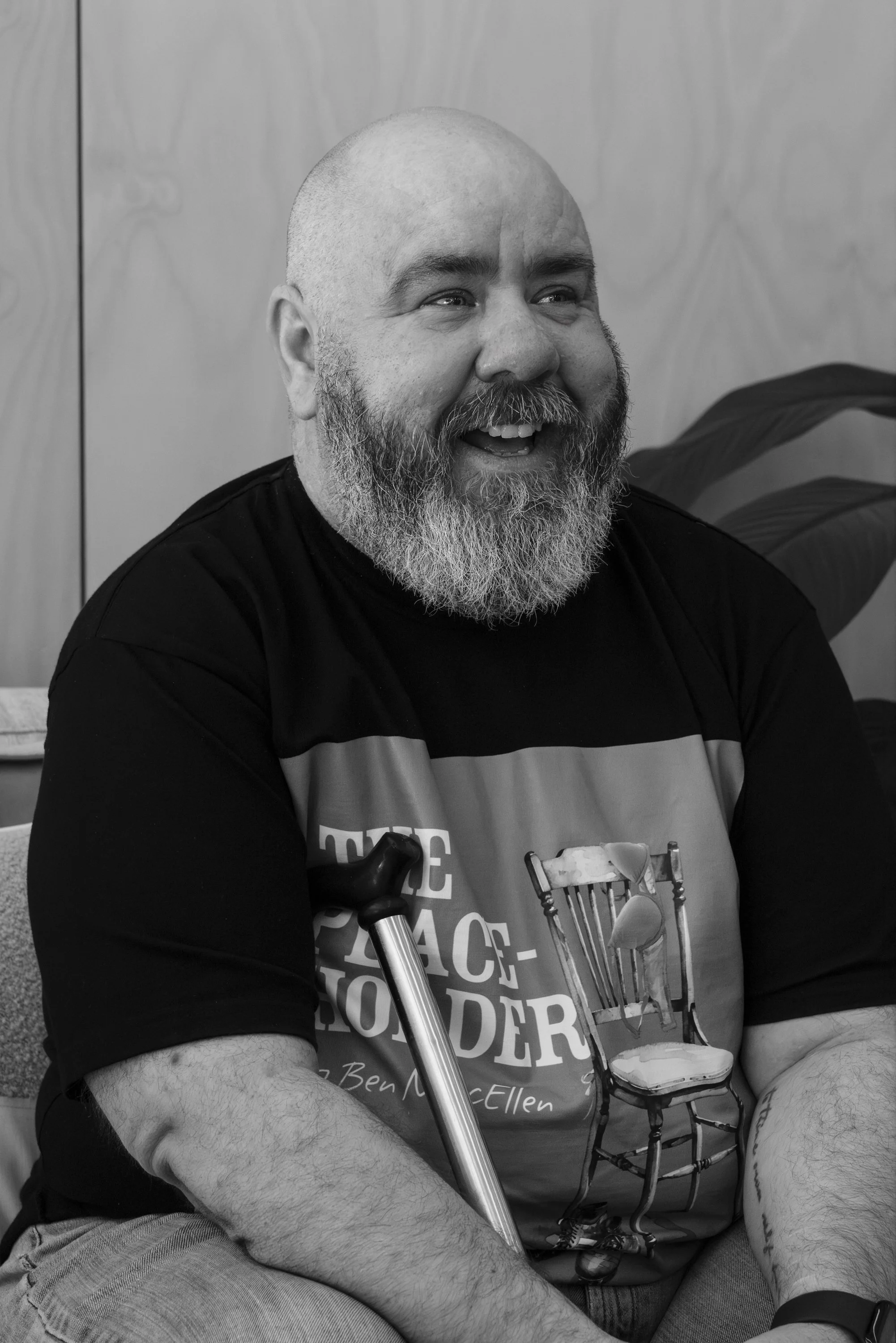
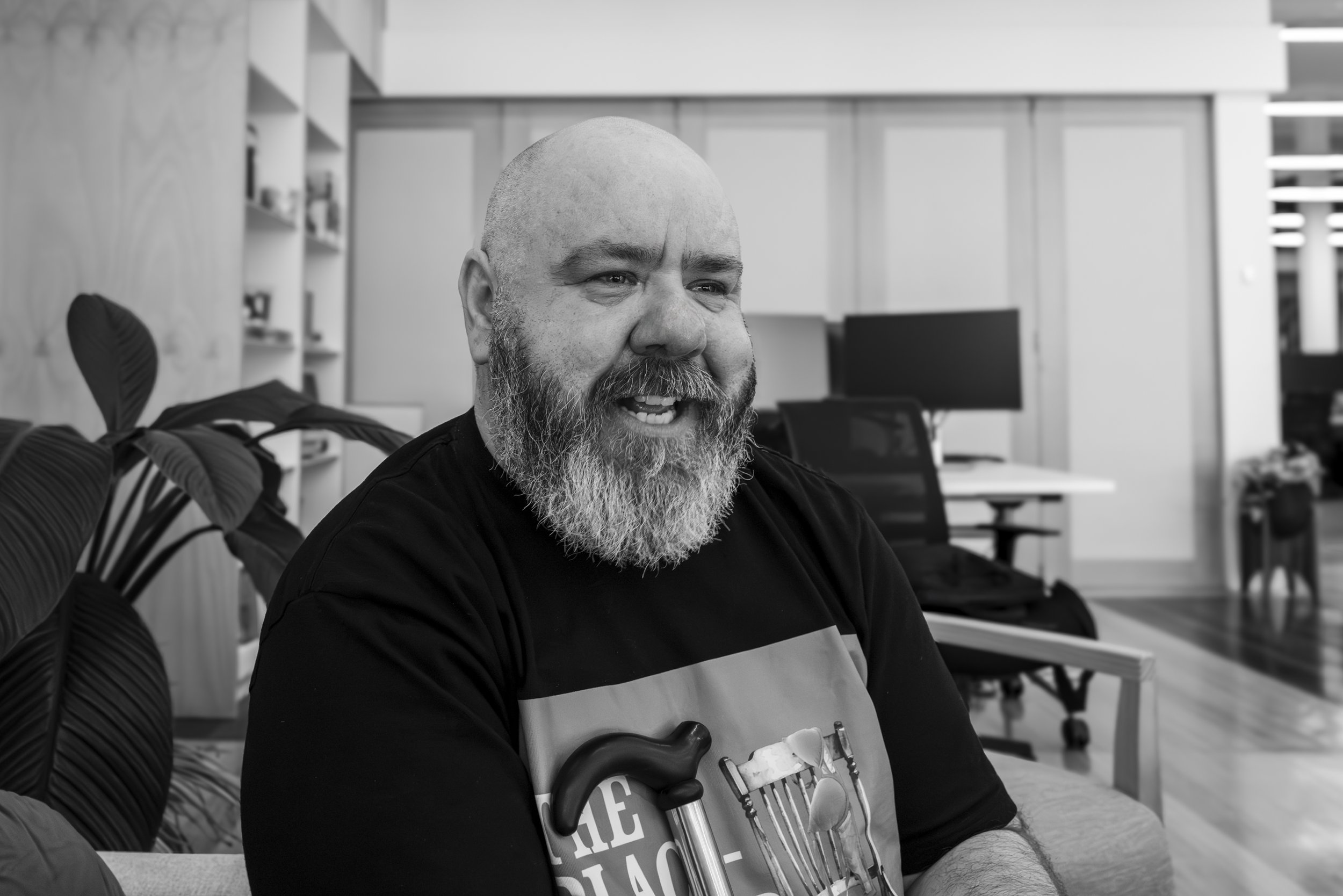
Ben spoke about his childhood with a kind of gentle hindsight, not rewriting the past, but finally understanding it. “It’s almost revisionist history, but it’s not,” he told me. “Because I realised that I was this awkward child, engaging with the world and feeling very much like I didn’t fit in and not sure why.” Now, with decades of distance and the language he once lacked, he can look back at those early moments with greater clarity.
“So, I look back on some of those times and think, well, that makes sense now,” he said. “I’m looking through that lens as a boy.” It’s as though the child has finally been granted the right frame. Not reimagined but properly recognised.
Ben’s first love was acting. He was accepted into a theatre program in Wagga Wagga at seventeen, a moment he once believed would shape everything. But when he wasn’t allowed to go, the path ahead narrowed. “It’s one of my biggest regrets,” he admitted softly. He moved into amateur theatre, searching again for belonging, for language, for himself.
But without understanding his gender, he was lost. “My life was very messy and I was very unhappy for a long, long time,” he told me.
Years later, the confusion around identity deepened into something more painful. He describes his teens and twenties as years spent “lost,” wrestling with sexuality and gender without a map. Counsellors helped peel back layers, what he calls “the onion”, revealing that bisexuality wasn’t the full story, and that something deeper was waiting to be acknowledged.
Everything shifted at 33, when he finally understood: he was a man. That clarity didn’t arrive explosively, it settled. Realising he was transgender was not the end point, it was the beginning of clarity, and relief.
“It was the opening up of joy,” he said simply. “Me being absolutely myself.”
Transition, however, didn’t erase the life he had already lived. Instead, it folded into the person Ben was becoming.
He is both a man who has lived 21 years in the world as male, and someone who carries memories of being socialised and treated as female. That duality gives his writing a richness and complexity that audiences can feel. “It became important that despite wanting to be seen as a man, people also understood I’d lived as female,” he said. “That perspective doesn’t just disappear.”
Transition offered freedom, but it also stripped away anonymity. Living in a regional town during transition brought its own challenges. Working at a local telco meant his transition became public very quickly, hundreds of people knew within days. “I realised I wasn’t going to be invisible in Bendigo anymore,” he told me. For a while, that visibility was overwhelming. He remembers walking down the street feeling exposed, unsure how people would react. Over time, though, the fear softened, replaced by a sense of pride and self-possession. Today he wears his “Trans Mansplaining” T-shirt (A previous play /monologue of Ben’s) in public with humour and confidence; and he notices how women respond with warmth while men squint at it, trying to work out whether it’s political.
Ben also spoke candidly about identity within queer community. “I struggled with being seen as gay and trans at the same time,” he explained. “It feels like one gets cancelled out for the other.” Visibility, for Ben, has never been singular, it’s layered, complex, sometimes contradictory. But always real.
If transitioning at 33 marked the beginning of being fully himself, then the years before were the groundwork. The rehearsal for the role he was always meant to inhabit. And now, as a playwright, advocate, and storyteller, he uses those experiences with intentionality and care. They inform his characters, his empathy, his humour, his understanding of complexity, and ultimately, they shape the heart behind every story he writes.
What’s striking is that Ben talks about his past not with bitterness, but with an almost artistic curiosity. As if those early years were a rough sketch for who he would become. He acknowledges the pain, the hiding, the shame and the confusion. But he also honours the threads that carried him through: creativity, the women who saw him, the slow revealing of truth, and the eventual arrival of language that aligned with lived experience.
There is another thread running quietly beneath Ben’s story, one that reveals as much about him as any chapter of his gender journey. Ben lives with ME/CFS (Myalgic Encephalomyelitis / Chronic Fatigue Syndrome), a condition often misunderstood, reduced, or dismissed entirely. He spoke about it with the same candour he brought to every part of his story, not as a footnote but as a defining element of how he moves through the world. “Some days my one task is having a shower,” he told me. “If I put on clothes instead of staying in my boxers, that might be my entire day.” It wasn’t said with self-pity. It was simply the truth of a body that demands negotiation.
Coming to terms with ME/CFS required its own kind of transition. For years, Ben resisted identifying as disabled, believing that capability meant consistency and productivity. The condition pushed back against those assumptions. He described the challenge not just as physical but emotional, a grief for the life he might have lived if his energy wasn’t rationed so fiercely. And yet, in that limitation, he found a different kind of focus. The hours when his mind is clear and his body cooperative become “precious,” he said, “guarded,” because they are the windows through which the stories arrive.
What changed everything was allowing disability to become part of his identity rather than something he had to hide or minimise. “I realised I could be capable and creative and still be disabled,” he said, a realisation that participating in the Midsumma Pathways mentorship program for disabled LGBTQIA+ artists helped crystallise for him. Instead of viewing ME/CFS as an obstacle that disqualified him, he began to see it as shaping the rhythm of his work. Slower, yes, but also deeply attentive. The pauses, the stillness, the enforced rest became the places where characters deepened and where the stories gained complexity.
And perhaps most beautifully, Ben now speaks about ME/CFS as something that sharpened his empathy. It taught him patience, humility, and a profound respect for the unseen labour behind simply existing. It made him gentler with himself, and, by extension, gentler with his characters. The condition hasn’t limited his creativity; it has changed its texture. His writing carries the imprint of someone who has learned to move carefully through the world, to notice subtleties, and to hold both strength and fragility in the same breath. In that way, his disability doesn’t diminish his work; it deepens it.
Through everything; the searching, the grief, the revelation, the joy, the thread that carried Ben was story. He is trans. He is queer. He is disabled. And every layer was hard-won.
“My writing is my legacy,” he said. “My plays are my children.”
His journey so far is long, messy, brave, and profoundly human. But now, he isn’t just surviving, he’s shaping it, line by line, bringing others with him through sheer honesty.
In telling his stories, Ben reminds us of something profoundly simple but deeply resonant; becoming oneself is rarely a single moment. More often, it is a long, uneven journey full of tiny recognitions, misalignments, breakthroughs, and reveals.
His life before transition is not a discarded chapter. It’s the prologue to a story still unfolding.
The Previous Part One of this series on Ben MacEllen is available here : https://www.capturingcourage.au/ben-macellen-december-2025-1
The Placeholder by Ben MacEllen, premieres at fortyfivedownstairs, Melbourne, from 27 January to 8 February 2026, Presented by Midsumma Festival.